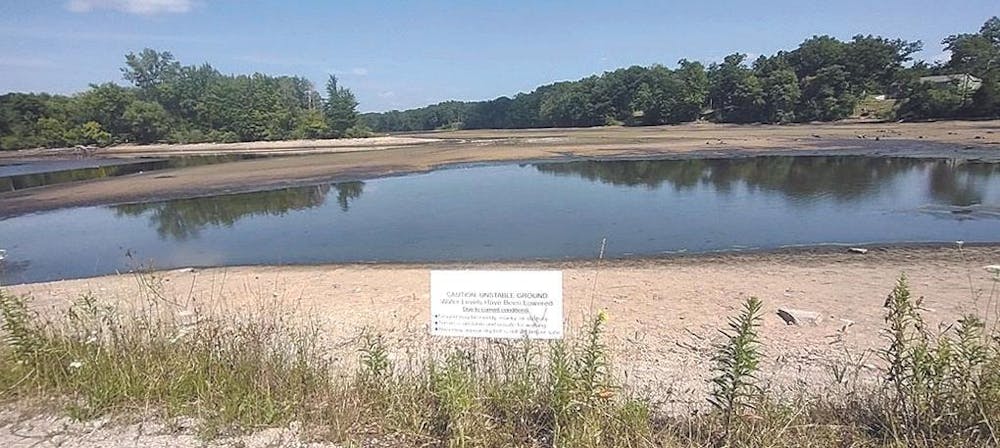
The White River Watershed Partnership has a goal of the removal of the dams at White Cloud and Hesperia, which it says is crucial to the stability of the fish habitat in the area.
Stretching across a diverse watershed, the White River is home to extensive cold-water habitat vital for trout and salmon reproduction. However, the WRWP said the impoundments at White Cloud and Hesperia warm the water to levels unsuitable for reproduction of cold water fish. To maintain fishing opportunities, tens of thousands of brown trout are stocked between White Cloud and Hesperia annually.
Upstream of White Cloud, no stocking of trout is necessary due to natural reproduction. Similarly, the North Branch sub-watershed supports large, self-sustaining populations of trout and salmon — a living example of what could be possible throughout the main branch if warm water barriers were removed.
The proposed future for the White River is a cool, free-flowing waterway from source to mouth. The WRWP said this requires overcoming four major impediments: Impoundments that warm the water and block fish passage; runoff from industrial, agricultural, and urban sources; substandard road-stream crossings; and soil erosion from poorly managed land use.
Actions the WRWP suggested include removing obsolete dams to restore natural flow and temperature; implementing agricultural setbacks to protect riparian zones; eliminating point-source pollution; and replacing inadequate culverts with fish-friendly crossings.