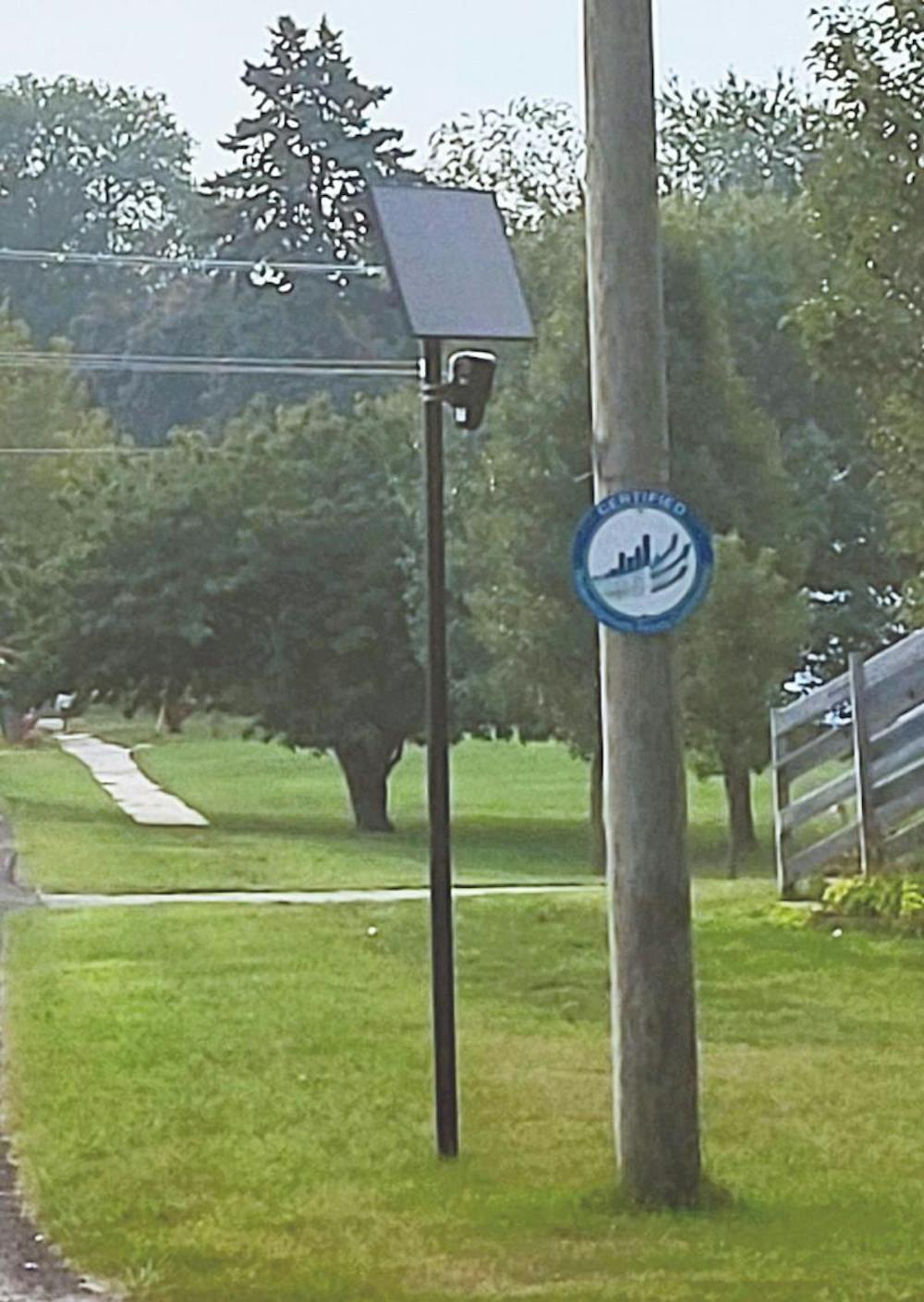
The following statement from the Oceana County Sheriff's Office has been approved by Undersheriff Ryan Schiller
The Oceana County Sheriff's Office is announcing the start of a 90-day trial of Flock Safety License Plate Recognition (LPR) cameras to evaluate how this technology may assist law enforcement in solving crimes, locating wanted individuals, and recovering stolen vehicles.
At this time, no contracts have been signed, no permanent purchases have been approved, and no commitments have been made regarding the future use of this technology.
The opportunity to evaluate the system has also been presented to local townships, cities, villages, and municipalities throughout Oceana County so they can become familiar with the technology and determine whether it may benefit their communities. Any future decisions would be made independently by each participating community.
Why Law Enforcement Uses License Plate Recognition Cameras
Across the country, license plate recognition cameras have become an important investigative tool. They are designed to provide officers with leads after crimes occur and to quickly identify vehicles associated with criminal activity.
These systems have assisted law enforcement agencies in:
• Recovering stolen vehicles.
• Locating missing or endangered persons.
• Identifying suspect vehicles involved in violent crimes.
• Solving burglaries, thefts, robberies, and hit-and-run crashes.
• Locating vehicles connected to AMBER Alerts and other public safety alerts.
• Developing investigative leads that otherwise may not exist.
Like fingerprints, DNA, surveillance video, or eyewitness accounts, license plate information is simply another investigative tool that helps law enforcement piece together facts during an investigation.
What License Plate Recognition Cameras DO
The public often has questions about what these cameras actually do. The following are factual statements about the technology:
• They capture images of vehicle license plates.
• They record the date, time and location where a vehicle was observed.
• They capture a photograph of the vehicle itself, including characteristics such as color, make and model when possible.
• They compare license plates against databases associated with legitimate law enforcement purposes, such as stolen vehicles or wanted vehicles.
• They generate investigative leads for law enforcement.
• They do not automatically determine that someone has committed a crime. Officers must independently investigate any alert before taking enforcement action.
What License Plate Recognition Cameras DO NOT Do
It is equally important to understand what these cameras are not designed to do. These cameras:
• Do not use facial recognition technology.
• Do not identify drivers or passengers.
• Do not record conversations or audio.
• Do not monitor cell phones.
• Do not track individuals through their personal devices.
• Do not issue speeding tickets or other automated traffic citations.
• Do not continuously livestream the public.
• Do not replace police officers or criminal investigations.
Their purpose is limited to capturing license plate information and vehicle images for legitimate public safety purposes.
Addressing Public Concerns
The Sheriff's Office recognizes that new technology often generates questions and concerns. We encourage residents to seek factual information rather than relying on misinformation or social media speculation.
Oceana County is not becoming a "police state." This trial does not represent "Big Brother" monitoring residents, nor does it create mass surveillance of the public.
The Sheriff's Office has no interest in tracking law-abiding citizens or monitoring where people travel in their daily lives. Our mission remains exactly what it has always been: protecting our communities, preventing crime, and holding offenders accountable.
The cameras are intended to help identify vehicles connected to criminal investigations — not to monitor everyday activities of citizens who are simply going about their lives.
As with any investigative technology, information obtained through the system must be used in accordance with applicable laws, department policy, and constitutional protections.
Evaluation Process
During the 90-day trial, the Sheriff's Office will evaluate whether the technology provides measurable benefits to public safety in Oceana County.
The evaluation will include consideration of:
• Investigative value.
• Crime-solving effectiveness.
• Recovery of stolen vehicles.
• Assistance in locating missing or endangered persons.
• Costs and long-term sustainability.
• Community feedback.
At the conclusion of the trial period, the Sheriff's Office and participating local units of government will review the results before making any decisions regarding future implementation.
Commitment to Transparency
The Oceana County Sheriff's Office is committed to being transparent throughout this evaluation process.
We understand that people may have questions whenever new technology is introduced. That is exactly why this is a trial. We want our residents to know that no contracts have been signed and no long-term decisions have been made. Our responsibility is to evaluate tools that may help us solve crimes, recover stolen property, locate missing persons, and improve public safety while respecting the constitutional rights and privacy of the people we serve.
The Sheriff's Office encourages residents to ask questions, learn about the technology from reliable sources, and participate in constructive discussions as the evaluation moves forward.
Separating Facts from Misinformation
The Oceana County Sheriff's Office understands there has been significant discussion online regarding license plate recognition technology. As with many topics on social media and the internet, not everything that is posted online is factual or provides the complete picture.
Many articles, videos, and social media posts about Flock Safety contain outdated information, opinions presented as facts, or statements that do not accurately describe how the technology is actually used by local law enforcement agencies. We encourage residents to review information from multiple credible sources and ask questions rather than relying solely on internet commentary.
Like every law enforcement technology, Flock Safety is subject to applicable federal and state laws governing criminal justice information. Agencies using the system are expected to comply with those legal requirements, department policies, and constitutional protections.
One misconception we want to address directly is that Oceana County would automatically share information with every government agency.
That is not accurate.
Should the Sheriff's Office ever implement this technology following the evaluation period, Oceana County would control who information is shared with. Access is determined by the local law enforcement agency — not by Flock Safety. The Oceana County Sheriff's Office does not intend to share data with U.S. Immigration and Customs Enforcement (ICE) as part of this evaluation or any potential future deployment.
Another common misconception is that these cameras are uncommon or only used by law enforcement. In reality, license plate recognition technology has become widely used throughout the United States by both public and private organizations. Many major retailers, shopping centers, and commercial properties utilize similar technology as part of their security programs. For example, customers visiting retailers such as The Home Depot or Lowe's may have their vehicle license plates captured by security camera systems that include license plate recognition technology. For many people, this type of technology has already become part of everyday life, often without them realizing it.
Regardless of whether this trial leads to permanent implementation, the Sheriff's Office remains committed to one guiding principle: using technology responsibly to enhance public safety while respecting the privacy and constitutional rights of every member of our community.
"We welcome honest questions and respectful dialogue. Our goal is to provide factual information so residents can make informed opinions based on how the technology actually works — not on rumors, misinformation, or conspiracy theories that often circulate online. Transparency and accountability will continue to guide every decision we make throughout this evaluation process."