TRAFFIC HALTS AS STORM WHIPS REGION; MILK, COAL SUPPLY LOW; - All Roads Blocked; Firemen Warn of Grave Fire Peril – All Schools Closed as Drifts Prevent Teachers and Pupils from Reaching Desks; Tannery Serves Lunch to Workers
That was the headline that appeared in The Whitehall Forum Thursday, Feb. 6, 1936.
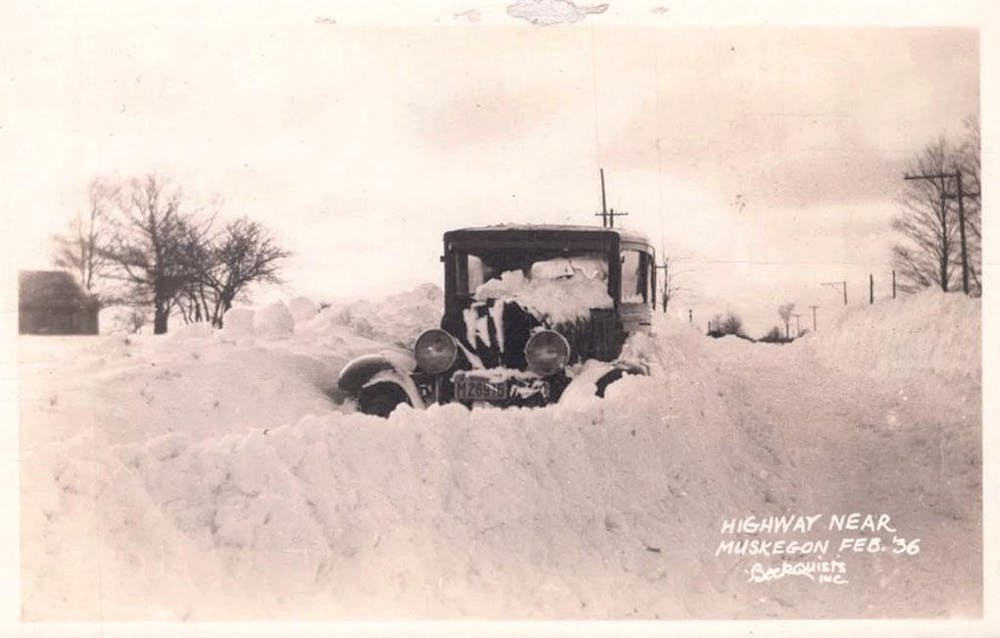
At least three heavy snowstorms hit the region within a two-week period – Jan. 22, Feb. 3, and Feb. 8. These storms, combined with gale-force winds created significant snowdrifts, some reportedly reaching up to 24 feet high, blocked roads and transportation routes, making travel nearly impossible. Along with the snow and wind, temperatures remained well below normal, with nights hitting 20 below zero in some areas. This intense cold made the already difficult conditions even worse and posed risks of frostbite and hypothermia.
Six inches of snow fell by Jan. 30, 1936, adding to the nearly 72 inches of snow – six feet that had fallen in the area so far that winter – with the majority of it during January.
With milk, bread, and fuel supplies running low, a storm-bound White Lake region was waiting for the gale to subside so that attempts could be made to cut through the drifts which paralyzed all transportation throughout this region.
US-31 to Muskegon was blocked. Huge drifts on the causeway defied all efforts of plows. For several hours, the road to Montague was blocked, by a huge drift near the L. T. Covell company office halting all traffic.
Whole sections of the northern part of the county were held helpless in the grip of the storm with no transportation of any kind being possible.
Fire officials in both Whitehall and Montague were greatly concerned over the fire hazard. They feared extra firing as an effort to keep warm might cause fires. So badly drifted were the streets in both towns that it was feared no hose could be brought to the scene of a blaze in time to prevent a catastrophe, especially with the gale threatening to spread the flames.
Both Whitehall and Montague schools were reported shut down. All other schools in the area were also closed, as teachers and pupils were unable to get through the enormous drifts.
Hot dogs and hot coffee were served at noon by the tannery to all workers who were unable to go home for dinner.
Coal companies in Whitehall and Montague were besieged all day with appeals for fuel. Before any fuel could be delivered, however, all the firms found it necessary to shovel through heavy drifts. Most deliveries were in 100 or 200-pound lots, enough to tide families over and get them through the storm. Fuel supplies here were light, but relief was expected as soon as the county plows succeeded in breaking through the drifts which blocked the causeway at Muskegon.
Virtually all travel was on foot. Food stores made no attempt to use their trucks for deliveries. Only the main streets in both towns were passable for cars.
Milkmen were unable to reach Whitehall or Montague, and milk supplies were exceedingly low. The only bread available was the output of the local bakery.
Rural carriers were able to cover only short distances of their routes, the carriers travelling on foot and using snowshoes.
On Feb. 13, the newspapers were still reporting that streets in both Montague and Whitehall continue to be blocked for the most part. That is when 42 Montague and four Whitehall men showed that the spirit that flowed in the veins of the pioneers who chiseled civilization from what was virgin wilderness to form this great land, still existed.
When the drifted condition of the roads cut off supplies and mail services, and tied up all transportation, and when all county plows were snowed in or broken down, this band of men volunteered to blast a way through. Starting early in the afternoon, with the temperature hanging near zero, many of these men shoveled far into the night, without rest or food, refusing to give up until they had completed their task.
Cold and hungry, they blasted a road through 14 miles of drifts from four to seven feet deep, singing and laughing – making a joke of their weary labor. Starting from the outskirts of Whitehall, they shoveled a road to Dalton in less than 12 hours, to meet the Muskegon crew and plow, who had taken longer than that time to open their stretch.
These men were not obligated to stick to their work. They were not hired workmen, but were volunteers, working without thought of reimbursement for their efforts. Stubborn pride and a spirit of good fellowship kept them going where paid workmen would have lagged. They did a fine job, and we are proud of their spirit and their accomplishment. It just goes to show that when men of this region tackle a job, it is as good as done. Unfortunately, there does not seem to be any record of these hearty souls by name.
Following a six-week siege of snow and storm, accompanied by low temperatures, which tied up all transportation, blocked highways, and caused considerable hardships to residents, Mother Nature finally relented and smiled warmly upon us.
Sun and rising temperatures settled the huge drifts as much as two feet in spots and caused a general loosening up of snow and ice. Tons of ice and snow which had accumulated on roofs of homes and businesses quickly broke loose and crashed to the ground, endangering passersby. Light and telephone wires were torn from several homes by the ice. A porch of the Louis Buttleman home was torn from the main structure by the weight of the accumulated ice and snow, and a barn belonging to Robert Deyman was completely wrecked. Several other cases of damage were also reported.
As quickly and easily as Mother Nature had donned her heavy white garments, she changed them. Whereas the roads were blocked by snow barriers, they were now nearly impassible because of the softening conditions. Luckily, however, the ground beneath was snow had remained unfrozen, and the water seeped away, lessening the danger and inconvenience of a sudden thaw.
Although the break had restored confidence in the fact that spring was on the way, the winter is by no means over, and we still have plenty of snow to contend with. However, the worst is past, and we can await the coming of summer with high hopes.
The harsh weather that year even caused Lake Michigan to freeze over, an occurrence that had not happened in 30 years.